Monday, February 15, 2010

Accepted To Columbia 3.6 Gpa


13 ° FOLKLORE FESTIVAL
"A SONG FOR FREEDOM"

during 12, 13 and 14 of February, was a major event attended by more than 5 000 people in three days. On this occasion, enjoyed a free public show, which included the prescencia of several local artists and renowned region and they gave in this weekend a great concert of varied music, like dance that raised the participation of people, dancing in place.
The "Civil Entrepreneurs Association San Lorenzo Department" , participated in this occasion with an institutional stand that housed entrepreneurs who offered their products as:
  • puzzles and toys
  • Bakers
  • several clothing for women
  • craft beer wines and jams
also noticed the large crowd that came to the institutional stand, to know this great project named "Entrepreneur", where through a screen, was shown digitally, a document with pictures and related brands of our partners.
is no less important to mention, my thanks to the firm "Italmet ARGENTINA" of the city of San Lorenzo, who very kindly gave us the infrastructure of the stand which was put on display with the collaboration of all partners and colleagues of our growing institution.

The "Civil Entrepreneurs Association San Lorenzo Department" , kept his word and remains committed to growth and development of the region. Congratulations everyone!

Javier O. Curra
President
ACEDSL

Sunday, February 14, 2010

What The Mean Of Software Exception Coooooo5

Wall-E: Music


Andrew Stanton and the composer Thomas Newman carried wonderfully well in their first collaboration, "Finding Nemo" (Finding Nemo), so it seemed natural to return to work on "WALL • E". Because the film is more emphasis on visual storytelling and less on dialogue, music plays a bigger role than usual, as it helps filmmakers to convey feelings and to communicate the story. Newman collaborated with rock legend Peter Gabriel in a song called "Down to Earth", creating a fun postscript to the movie musical. Stanton notes: "Working with Tom has always been a dream for me. I've been a fan of his music because it is very original. I remember the first time that I spoke of this project was the night of the Academy Awards ® in 2004, where he had gone with 'Nemo'. I said I had an idea for a movie, and I had to do with 'Hello Dolly' and science fiction. I wondered if he would talk after what had just said. But it so happened that the soundtrack of 'Hello Dolly' was composed by the legendary Tom's uncle, Lionel Newman, so in a way, all in the family. "The only thing that is guaranteed when working with Tom is that get something unconventional, "Stanton says .." When you want something that belongs to a conventional genre like science fiction, you know you will get something with a twist. The soundtrack gives the film its own identity and not like anything we've heard before. In 'WALL • E', reached a new level of beauty and majesty, which exceeded anything I had ever imagined. " One of the things he most admired Newman Stanton's work on "WALL • E" was his ability to grasp issues of outer space and all the details of the relationship between the two protagonists robots. "Tom was able to communicate a sense of the world we were creating with its soundtrack," says Stanton .. "In the first act is a scene where we see WALL • E in your daily routine, something very mechanical. The soundtrack has a rhythm 'industrial' with a very weak whistle, almost like someone whistling while you work. Tom always get the exact tone for those times. And with its unique mix once you have recorded the theme with the orchestra, gives a theme to a whole new palette of sounds. You have an innate ability to understand the most intimate feelings hides a scene. I think that's why we got along so well, because I always focus on the emotional aspects of stories. "


Newman added: "Writing music for an animated film is very different from writing for a real action movie. In animation, everything is expressed in a very short time, sometimes in seconds. When transmitting something, immediately starts the action. In 'Nemo' I learned that you can not pass on something for a long time. To work in animation transitions are necessary, and for that music should help you move from one feeling to another.

"My music tends to follow a pattern, it is often repetitive. I like working with a drummer or a guitarist who can add to these patterns something that is relevant to the sound, "says Newman. "If you repeat a few phrases, the ear may hear tones that enhance the perception of sound and music. What interests me about music is its depth. "

For the song "Down to Earth", which is heard at the end of the film, Stanton had the opportunity to collaborate with another of the giants of music, Peter Gabriel. Stanton, who has been a big fan of rock legend since he was 12, got in touch with Gabriel to write a song that was part of the end of the story.


Stanton recalls, "Working with Peter has been one of the best moments of my career. When we reached the end of the movie, I knew we needed to add some additional plot points and create something to convey the overall message of the film. And suddenly I remembered that Peter is the father of world music for most of the Western world. The idea that he and Tom worked together I felt fantastic, because he was convinced that the result would be wonderful. Tom went to London to see Peter, and from then there was a love story. Suddenly, Thomas Newman and Peter Gabriel came up with this amazing song called 'Down to Earth', which far exceeds my highest expectations. The letters of Peter are very simple, but it has totally hit the spot. I was so excited when I heard the lyrics, because it is very smart and fits perfectly. Perfectly reflects the style of Peter Gabriel, and it was based on the story I had written. I was captivated from the very start. "

"You see much that is a song by Peter Gabriel, but also has the ability to connect and sensitivity of Tom," Stanton added .. "Tom was so inspired by the song, which returned to film and other music created for some key moments in the same subjects. It looks very good in the film. "

Source: Walt Disney Studios

Friday, February 12, 2010

Duffel Bag Pattern Like Vera Bradley

Wall-E: The World of Wall-E Wall-E


production designer of "WALL • E" needed a unique cinematic vision of the future that included everything from trash covered Earth abandoned to a huge cruise ship floating through space and home to thousands of humans. The production design supervisor for the film was Ralph Eggleston ("Finding Nemo" [Finding Nemo]), a Pixar veteran who had been artistic director in the films "Toy Story" and "The Incredibles" [The Incredibles], and had directed the Oscar-winning short "For the Birds." To help you achieve your artistic goals, he worked closely with three artistic directors Anthony Christov (artistic director of plateau), Bert Berry (artistic director of lighting), and Jason Deamer (artistic director of the characters). According to producer Morris: "From my point of view, the biggest challenge of the film was production design and consistency of the appearance of our sets and environments. We knew we need a future image of the Earth in a state of neglect, but it was very hard to imagine in detail all the intricacies. The design of the Axiom and the space environment were also difficult to imagine, but we have more material for these items. Ralph and his team did a great job creating, building and researching worlds became characters in their own right and helped Andrew to tell the story I wanted to tell. " "One of the best things about Pixar," said Eggleston, "is that we can create animated films that also have elements of film special effects and live action movies. We found our own sense of the world and starting from scratch. In 'WALL • E', it is essential that the public believe in this world, because otherwise it will have a hard time thinking that our hero is really the last robot on Earth. So we decided to make Earth very realistic and very detailed. We create about 9.5 miles of urban landscape to know exactly where this WALL • E every time he moved and that the world really existed. Stylising just a little to the animation, but these are the actual dishes we've ever created at Pixar. It was also the most difficult task in which we do from a standpoint of art.


"Another of our objectives was to use color and lighting to enhance the feelings of WALL • E and help audiences connect with it," he adds. "The first act has a very romantic and emotional enlightenment, and the second, the lighting is much more sterile, orderly and clean. The second act is the antithesis of the first. As the film progresses, we gradually introducing a more romantic light. An important part of my job is to discuss all these crazy ideas in the art department to go forward as it unfolds the production of the film. "

To create the appearance of outer space in "WALL • E ', Eggleston and his team idealized visions of the future of NASA scientists from the 50 and 60, and the artistic concept of Tomorrowland, Disneyland.

"One of the biggest influences for me and everyone who worked on creating our vision of the future was the work of art created for Tomorrowland," says Eggleston. "It was not about specifics, but rather the concept of 'Where is my kit for the future?". If you look at many of the drawings of the programs space 40, 50 and 60, you can see fantastic images of structures on Mars. Around 1978, they stopped because they did not want to spend money on something they knew they could not do. We were interested in showing how the future might look and how great it would get there. That's what we wanted to reflect the design of this film. "


The inspiration for the design of the Axiom came to seek luxury cruise ships, including those managed by Disney. Some travel to Las Vegas also suggested how use a practical lighting for artificial luxurious surroundings.

"The original concept of the Axiom emerged from a cruise ship," said Eggleston. "We designed a huge spaceship the size of a city. Is several kilometers long and can accommodate hundreds of thousands of residents. We knew that audiences would need some kind of visual support, so I put it near a planetary nebula. The first time we see the nebula is reminiscent of a mountain with something on top, and then see which is the Axiom. "

"One of the things that Andrew wanted to do with 'WALL • E' was to create a different look than we usually see in animated films, "recalls producer Morris. "Very often, it seems that animated films are recorded in a sort of computer space. We wanted it appear that directors of photography with real cameras had gone to these places and had recorded what we're seeing. I had wanted to photograph artifacts and everything seemed more real than usually animated films. During my long stay in ILM, I met many people who would be useful to us. "


Morris invited two of the best directors of photography in their respective fields to visit Pixar to advise him. Director of photography Roger Deakins ("No Country for Old Men" [No Country for Old Men], "The Assassination of Jesse James by the Outlaw Robert Ford" [The Assassination of Jesse James by the Coward Robert Ford], "Fargo" "O Brother Where Art Thou?" [O Brother!]), six times nominated for Oscars and best known for his regular collaboration with the acclaimed Coen Brothers, helped to lend its experience in aspects of lighting and camera. The famous magician visual effects and six-time Oscar winner Dennis Muren ("Star Wars" [The Wars], "Indiana Jones", "Terminator 2," "Jurassic Park" [Jurassic Park], "The Abyss" [Abyss ], "Twister") offered its expertise to create visual effects and images of atmospheric ambience.

"Both Roger and Dennis went contributed their views and gave us many ideas about how things would be," says Morris. "We got some old Panavision camera 70, similar to those used to record the movie original 'Star Wars' (The Star Wars) and recorded images to achieve the kind of artifacts that created these lenses. We focus on technical elements such as chromatic aberration, barrel distortion and other imperfections, and we took what we learned and apply it to the picture of our computer graphics. The contribution of Dennis and Roger was instrumental in creating these aspects of the film. For example, advice on photography, lighting and composition, we helped create the stark, dry landscape of the Earth in the first act. "


Morris's experience in live action films and visual effects also helped the filmmakers to fulfill his desire to seem that the film had been shot and not recorded. "I told the technical team in the real world, when you're shooting, the lens is usually about three feet from the plane of the film, and you can change perspective by tilting the camera. They took this information and returned with images that appeared twice a photographed image. The result is that it looks like a camera rolling, as opposed to being in a kind of virtual space in which everything is pristine. There are some imperfections in the final look of the film that will give more credibility.

As director of photography camera, Jeremy Lasky helped further improve the look of the film. "We developed our technology, camera and lighting to resemble the film had been shot with a camera. We use a ratio very broad and very deep so that the photograph was very rich. You can see some shots out of focus and in different layers to create compositions that seem to be painted with watercolors. Many planes also use hand-held cameras and still cameras, especially in space, so that the public is believed best what I was seeing on the screen, it believed that what he was seeing was a real robot in the real world. You feel you're watching a real scene completely. One of the great innovations we did for this film and Pixar, was key highlights preview before rolling to get a better idea of \u200b\u200bthe final frame of the movie. Before we had no information about the lighting at this stage of production. "


Danielle Feinberg was the director of photography for lighting. The acclaimed director of photography Roger Deakins ( "No Country for Old Men "[No Country for Old Men]," The Assassination of Jesse James by the Coward Robert Ford "[The Assassination of Jesse James by the Coward Robert Ford]) and the Oscar-winning visual effects legend Dennis Muren was advisors .

"When I saw the finished film, my first thought was, 'I've never seen a movie like this,'" concludes Morris. "I got the feeling that I was watching with eyes totally new."

Source: Walt Disney Studios

Wednesday, February 10, 2010

Homemade Castaway And Wilson Costume

:


The Pixar animation team, full of talent, has overcome seemingly intractable problems in the movies that you created in this way has set the bar higher and higher. From toys to ants, rats superheroes are chefs ... have created memorable characters that have been etched in the minds and hearts of people around the world. In his latest film, "WALL • E", had to face new challenges, because they had to create a fabulous cast of robots and humans. Thanks to the direction of the supervising animators Alan Barillaro and Steve Hunter (50 animators at the peak of production), and experience and talent of directing animator Angus MacLean, this film is another triumph for the art of animation. Jim Reardon, head of story on "WALL • E", observes: "I did not want to do in this film was to draw robots that look human, with arms, legs, heads and eyes, and also spoke. We wanted to use objects not normally associate with human characteristics and see what we could do to serve us the drawing and animation. " Stanton said: "We wanted the audience to believe they were watching a machine acquired its own life. The more they believe is a machine will attract more history. " One of the greatest challenges faced by the leaders was the need to clearly communicate feelings and actions without resorting to traditional dialogue. "We thought we could do without a traditional dialogue, maintaining consistency of character," says Stanton .. "In the real world, when characters can not speak (a baby, an animal), people tend to pass on their own feelings: 'I think you said', 'liked' ... it attracts a lot of the public. " According to Ed Catmull, president of Walt Disney and Pixar Animation Studios, "In 'WALL • E' animators have worked to the limit in order to transmit feelings and complex thoughts with so few words. It is reaching people through animation. "
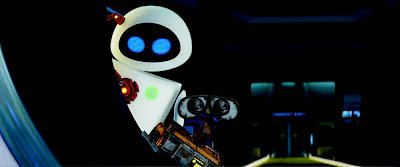


Stanton says: "In the world of animation, comedy is what I like most entertainers. With comedy feel at his best for them is instinctive. John Lasseter realized when he made the animation and directed his first short for Pixar, 'Luxo Jr', starring two lamps that are expressed without any dialogue. The desire to give life to a inanimate object is innate in animators. For the animators 'WALL • E' was like taking the handcuffs and let go. Could allow the visual effects will most history. They also found that it is an incredibly difficult task.

"the animators tried to limit verifications themselves, because I wanted the construction of the machines and how they were designed were apparent," he adds. "The characters seem to robots because they do not shrink or stretch. For animators was a puzzle to devise a narrative form that resembled the traditional but that suited a machine with the constraints of its design and construction. It was a great challenge, but it was very satisfying to find the focus and appropriate resolution. "


To assist in this task, the filmmakers and the entertainment team met with experts who designed robots actually visited scientists at NASA's Jet Propulsion Laboratory attended lectures on robots, and even took some robots to study, including a bomb detector of local police department. To understand what might look humans after hundreds of years of living in luxury in space, NASA expert Jim Hicks helped us talking about the atrophy and the effects of zero gravity on the body.

Jason Deamer, artistic director of the characters in the film, recalled that one of the points of departure for the design of WALL • E were his eyes. "One day, Andrew was inspired to create the eyes of WALL • E. He had been in a baseball game and used binoculars. He suddenly realized that if the sides slightly bent, the view you get is very different. That was one of the key design elements the protagonist. "


The rest of the design of WALL • E was based on its functionality. "How do you enter the garbage within itself and how the compact?" Question Deamer. It made several visits to recycling plants for operation of machines to compact trash. "We knew we needed to climb hills and mountains of garbage," he says. "We also had to compact trash cans, and have some type of hands to gesticulate."

One of the main discussion points when creating the character of WALL • E was whether to have elbows or not.

"We had initially designed to WALL • E elbows," says animation supervisor Steve Hunter. "That allowed him to bend your arms. As animators, we tried that was able to touch the face, could hang on a spacecraft, had a lot of movement. But when we looked, we did not like too much. It is designed to do a task, that is to get away in the belly. Why would he have elbows? It made no sense. With the help of Andrew and an inspired idea of \u200b\u200bdirecting animator Angus MacLane, did a slot on the side that lets you put your arms in different positions and that gives plenty of movement. We helped give a lot more life to the character. To have or not have elbows may seem trivial, but the way we solved the problem makes you believe more in WALL • E, because we did not choose the easy way. "


Despite the relative simplicity of their movements, to encourage WALL • E was one of the most challenging tasks for computer animation. According to the Barillaro animation supervisor, "" WALL • E has many controls, including a 50 only for the head. It is not organic like a human. We had to reduce their movements to the smallest expression that would be effective. The first thing leaders did when they had to do a scene with him was to test all the movements, like moving his head sideways. Tried that had a lot of mobility, such as a human being. We had to continually remind them that we wanted an animation as smooth as possible. In this case, there is no doubt that the more simple the better. "

As the voice of WALL • E was such an important part of his personality, the animators worked closely with sound designer Ben Burtt to inspire one another. Typically, the animators working with the sketches to develop animation tests. Then the voice said Burtt WALL • E and send it back to the animators for another pass. The voice and animation were assembled this montage together and did the final result.


The group also faced many challenges in making the animation of EVE. Although only two blinking eyes and four moving parts, it was necessary to analyze every move, no matter how subtle it was. EVE, which was designed to look like a robot futuristic, is the epitome of elegance and simplicity.

"We wanted it to be elegant," says Stanton .. "In this world there are different ways of conveying the masculine and feminine, and wanted that his movements were fluid, and were endowed with the charm of femininity."

MacLane explains: "While the movements of WALL • E are more traditional with motors, gears and teeth, EVE is a sleek oval-shaped robot that moves by magnets. All the structures and compositions are well cared for that the result is appealing. His movements are very graceful, which is expected of a technically advanced robot. "


Hunter added: "Every plane change, every angle, and even the way they bend their head when broken had to be done a certain way to achieve proper . All you have to do with his head had to be very subtle. Basically consists of four parts and two blinking eyes. We discussed a lot about how I should move my arms. We work on designs until we found the right positions to express different emotions. It transmits all that impressive. "

Besides some robots players (Auto, MO and bad robots among others), the character design team created a catalog of human robots and 10,000 people the Axiom. We designed a modular robot system using a series of heads of robots that could be combined with a variety of arms and bodies. Robots were created many different colors and distinct.


Collins co-producer said: "We created a library of characters with interchangeable parts to create a program to build robots. We could choose between different types of bodies and arms. We could change them to create different shapes and characters. We had almost a hundred variations and about 25 different basic shapes that we could mix and match to look like there were more characters in the film. "

For MacLane, was Stanton who inspired the animators to bear the best of themselves. "What makes Andrew a highly successful director," says MacLane, "is his ability to ever imagine all the movies. Is able to look at what you're doing and suggest how you can do better for the sequence. Has highly developed sense of narrative and history and knows how to pass it to the animators. Compare the best stories with jokes. In fact, what it does is tell a good joke that lasts about 90 minutes. We have several blocks that evoke different feelings, and he tries to imagine the best way to bring them together to tell a good story. In animation, our main task is to communicate things clearly and provide a platform to convey their story. "

Stanton also praised the work of animators in the film. "It's been great champions of this film. They liked the concept, especially the challenges and limitations that were faced to design all the characters as they have done. They did very well from the beginning. "

Source: Walt Disney Studios